What Are the Signs of a Refrigerant Leak?
Warm air is the most obvious symptom, but the system usually gives warnings before full failure. Watch for these:
Intermittent Cooling:
The AC works fine in the morning but blows warm air after idling in traffic. Refrigerant pressure drops faster under heat load.
Oily Film or Residue:
Residue near AC lines, the compressor, or under the hood. Refrigerant carries compressor oil, and leaks leave a greasy trace at the exit point.
Longer Cooling Times: The cabin takes noticeably longer to reach a comfortable temperature than it did earlier in the season.
Hissing Sounds: Sounds from under the dash or near the firewall can indicate refrigerant escaping under pressure through a cracked evaporator or fitting.
Why You Shouldn't Just Recharge
A recharge without a leak repair is a short-term fix. Your AC system is fully sealed by design; refrigerant doesn't evaporate or get used up under normal conditions. If the level is low, there's a breach. Adding refrigerant through a can without finding the source sends refrigerant straight back out the same leak.
We see this frequently with vehicles that come in for
ac auto repair after multiple DIY recharges failed to hold.
How We Find Refrigerant Leaks
We use two methods at our
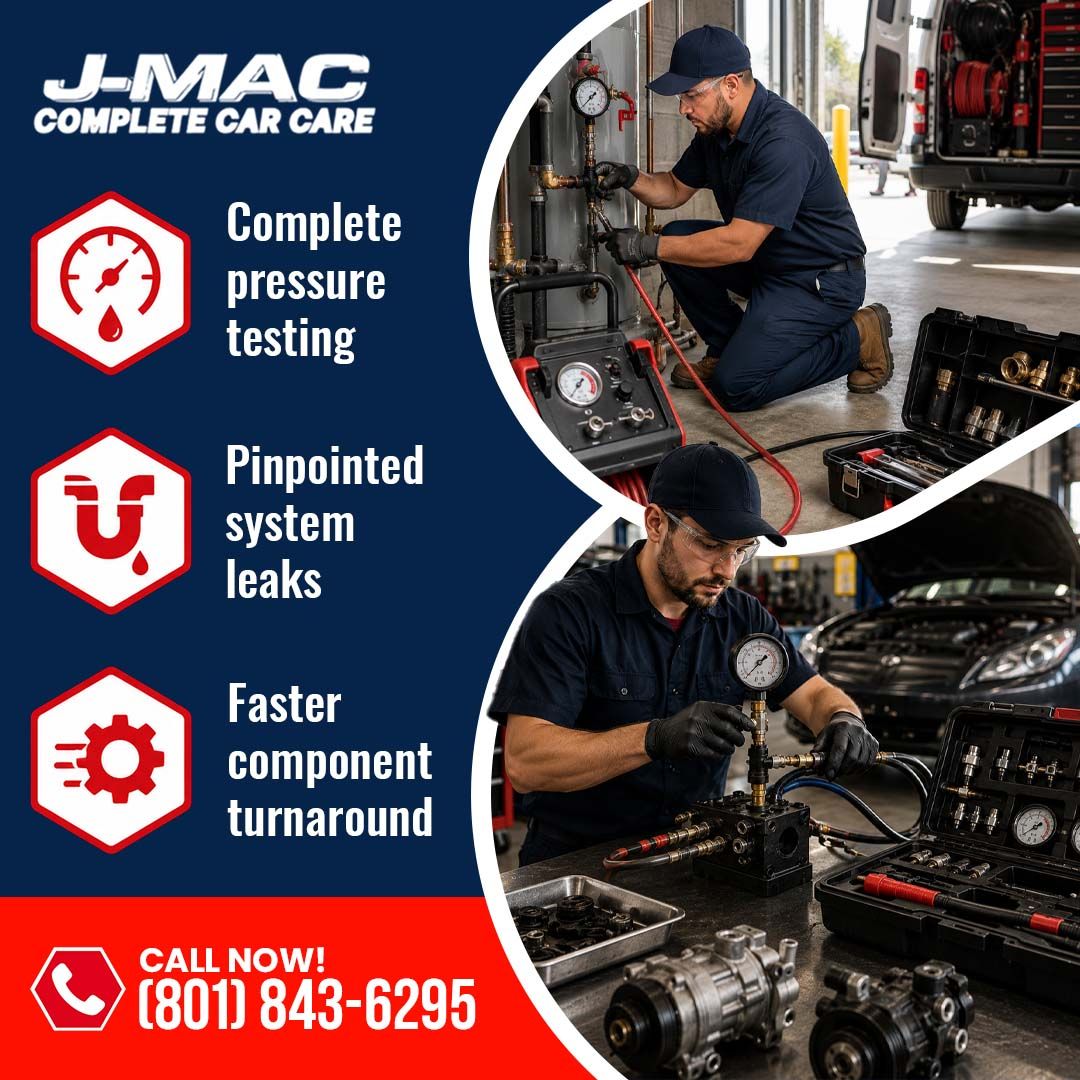
Salt Lake City shop: pressure testing and UV dye injection. Pressure testing identifies system failures by measuring how the system holds pressure when sealed. UV dye circulates through the system and makes the leak point glow under a black light, even small evaporator leaks that are invisible to the naked eye.
We photograph the leak location and send you the image before any repair begins, so you see exactly what we found. This is part of how we handle every
car air conditioning service: transparency built into the process, not added after the fact.
Evaporator Leaks Are the Hardest to Find
The evaporator sits inside the dash and isn't visible without disassembly. Many general
car radiator repair shops skip this component in a basic inspection. At J-Mac Complete Car Care, we specialize in complex under-dash work and are fully equipped for both R134A and R1234YF systems, the two refrigerant types found in most vehicles on Salt Lake City roads today.