

Why is my car losing coolant when there is no visible leak?

J-Mac Complete Car Care • October 9, 2026

Share this article

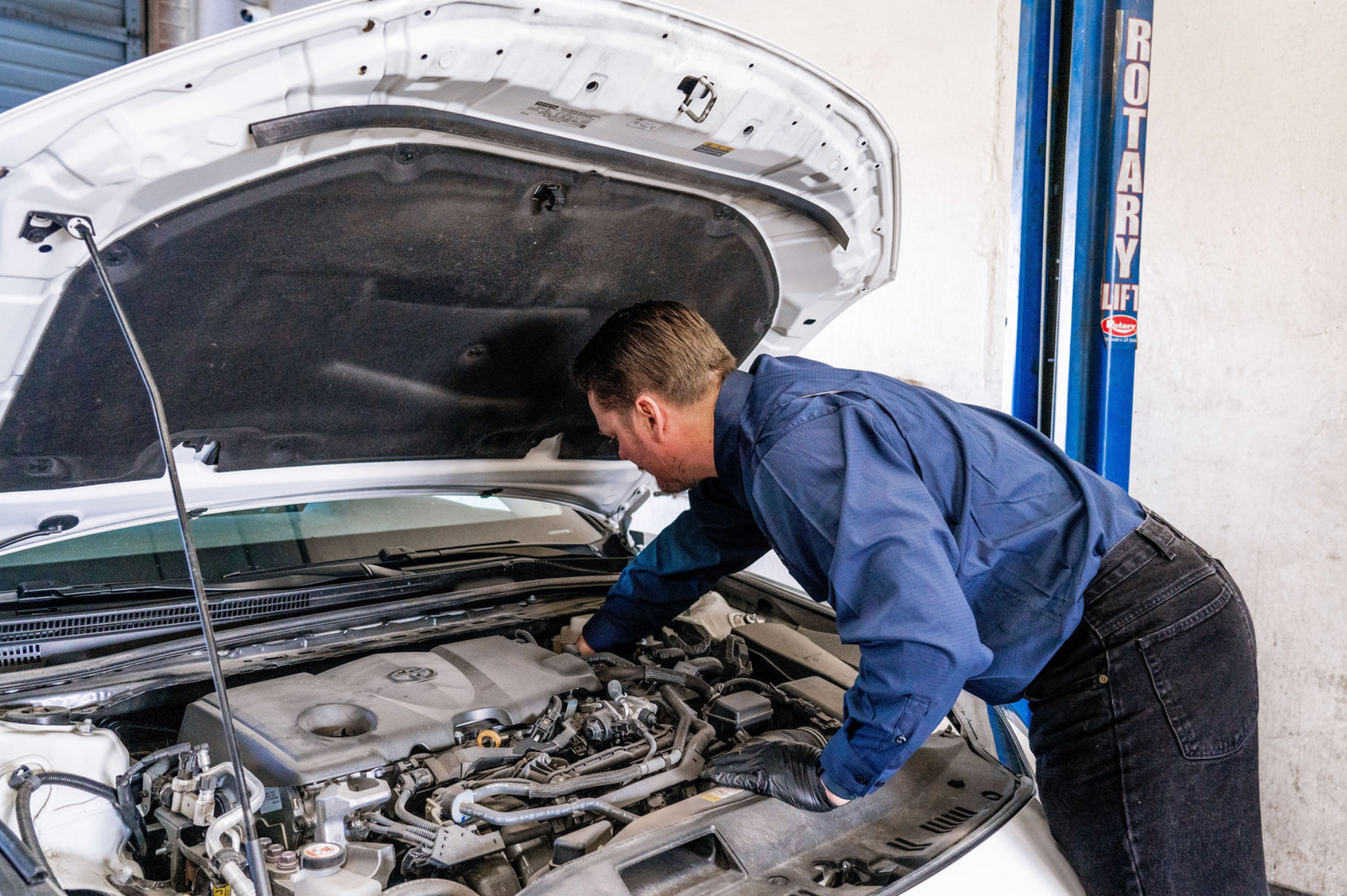
Technician in a navy work shirt leaning over the open engine bay of a white car beside a lift

If the level keeps dropping and there is never a puddle, the coolant is going somewhere you cannot see. Possible causes include an external leak that evaporates or is hidden from view, coolant escaping through a faulty pressure cap, a heater-core leak, or an internal engine leak. Compare levels only with the engine fully cold and the vehicle on level ground.

A cooling system diagnosis normally starts with a pressure test: the system is held under pressure so that a hidden leak, a weak hose or a failing part shows itself, and the hoses, thermostat and water pump get checked alongside it. A very small or intermittent leak can pass a single test, and a head gasket needs tests of its own, so the pressure test narrows the field rather than closing the case.

Before you open anything

Do not open the radiator cap or the coolant reservoir on a hot engine. The system is pressurized. Hot coolant or steam can escape violently and cause severe burns. AAA's guidance is never to remove a hot radiator cap, to wait at least 20 minutes, and to pull over straight away if you see steam or hear hissing. Twenty minutes is a minimum, not a signal that the cap is safe to open. If the temperature gauge has not come back to normal, or you can still see steam or hear coolant escaping, leave the cap alone. Let the engine cool fully and follow what the owner's manual says for your vehicle.

Leaks that never make a puddle

Small external leaks are easy to miss: a hairline crack in a plastic radiator end tank, a water pump weeping at its seal, or a hose clamp that has loosened. These may leak mainly when the system is hot and pressurized, and a few drops landing on a hot engine turn to steam before they reach the ground. Look for a dried crust around a fitting, or a faint sweet smell under the hood after a drive. A pressure cap with a weakened spring can also let coolant escape at normal operating temperature, because its valve opens too early. Holding the system under pressure is the usual way to bring the drip out.

The heater core

A heater-core leak may become more noticeable when you start using the cabin heat, but it can occur in any season. When the coolant level keeps dropping, a sweet smell inside the car, an oily film on the inside of the windshield that keeps coming back, or a damp passenger footwell can point to the heater core. The film is worth acting on for its own sake, because it cuts your view through the windshield. Replacing a heater core often means taking the dashboard apart, so ask for the leak to be confirmed before you approve the job.

Coolant going into the engine

White exhaust that lasts after warm-up, contaminated oil or repeated overheating, together with coolant loss, are reasons to check for an internal leak. None of these signs alone proves a failed head gasket or a cracked head, and a film under the oil filler cap is not a diagnosis either. A combustion-gas test on the coolant is one of the checks used to confirm it, and a shop will often pair it with a compression or cylinder leak-down test. If you are told it is the head gasket, ask which tests were run. Left alone, an internal leak can cause serious engine damage, and so can any leak that lets the engine overheat.

Why topping it off does not fix the leak

Topping off brings the level back up, but the coolant is still escaping, and it does not make the car safe to keep driving. Use plain water only in an emergency: it freezes at 32°F, well above the freezing point of a correct coolant mix, and it has none of the corrosion protection the engine needs. Never pour cold water into a hot engine. Any repeated, unexplained drop in the cold coolant level needs a diagnosis; do not wait for a second top-off or an overheating event.

Book a cooling system check in Salt Lake City

Bring it to J-Mac Complete Car Care, 3520 S State St in Salt Lake City, Monday to Friday 8:00 a.m. to 5:00 p.m., or call (801) 843-6295. We start with a pressure test and text you photos and videos of what we find. We work on radiators, water pumps, hoses, thermostats and cabin heating.

Common questions

Can I drive it to the shop?

There is no safe rule of thumb, because how far you can drive depends on how fast you are losing coolant, and that is the part you cannot see. If the gauge climbs above normal, if you see steam, or if the heater suddenly blows cold, pull over when it is safe and let the engine cool. If you already know you are losing coolant, have it checked as soon as you can, and do not set out on a long trip until it has been.

How often should coolant be replaced anyway?

Follow the interval and the coolant type your vehicle's manufacturer specifies, because both vary widely by make, year and coolant chemistry, and the wrong coolant can do harm of its own. A car that is losing coolant is a different situation: that is a leak to find, and the interval does not apply until it is fixed.

Recent Posts

By Greg McKenna • September 28, 2026
A sealed car AC system can hold refrigerant for years. If cooling fades within months, a leak may be causing the recharge to wear off early.
By Greg McKenna • September 25, 2026
Car air conditioning service costs vary by diagnosis, from a refrigerant recharge or leak repair to compressor work. See what affects Salt Lake City pricing.

By Greg McKenna • September 23, 2026
Compare costs, diagnostic tools, warranties, and service experience before choosing between a dealer

By Greg McKenna • September 21, 2026
Brakes, diagnostics, A/C, electrical work, fleet service, and more are available through a full auto repair center in Salt Lake City.

Mechanic inspecting a car before repair
By Greg McKenna • July 30, 2026
Learn what Salt Lake City drivers should know before paying for car repair. Avoid costly mistakes and make informed decisions. Read the guide today!
Digital inspection
By Greg McKenna • July 23, 2026
Learn what digital vehicle inspections reveal, why they matter for your car's health, and how they prevent costly repairs. Schedule your inspection today!
Car AC Repair
By Greg McKenna • July 16, 2026
Is your car AC blowing warm air in Salt Lake City? Learn the common causes and when to seek repairs. Schedule your AC inspection today!

Refrigerant leak
By Greg McKenna • July 8, 2026
Wondering if your car has a refrigerant leak? Learn the warning signs, causes, and when to schedule AC repair. Book your inspection today!
